Governorship · Jharkhand, 2015–2021
Raj Bhavan, Ranchi
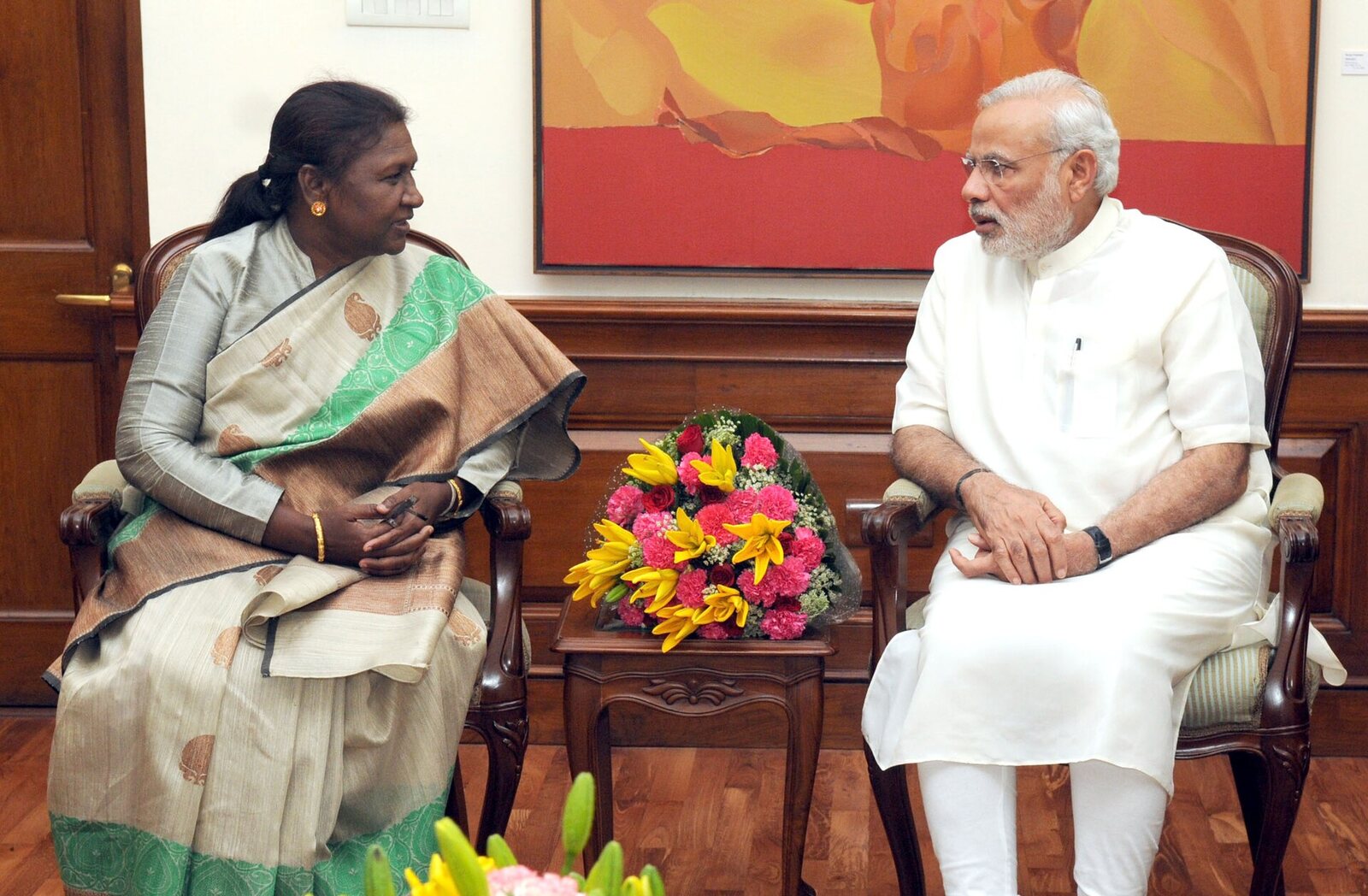
Sworn in on 18 May 2015 as the first woman Governor of Jharkhand, Droupadi Murmu held the office for more than six years — longer than anyone else has held it, and the first to complete a full five‑year term in the state.
Appointment
A constitutional office, not a political one
A Governor of an Indian state is appointed by the President under Article 155 of the Constitution and holds office during the pleasure of the President under Article 156, ordinarily for a term of five years. The appointment removes the holder from party politics.
Droupadi Murmu was sworn in at Raj Bhavan, Ranchi, on 18 May 2015. She was the first woman to be appointed Governor of Jharkhand since the state was created in 2000. She took the office in a state where the Scheduled Tribes are more than a quarter of the population, and where the question of tribal land has been the central political question of the last century and a half.
She remained in office until July 2021, when she was succeeded by Shri Ramesh Bais. No Governor of Jharkhand has served longer, and none before her had completed a full five‑year term.
The Office
What a Governor does under the Constitution
Part VI of the Constitution establishes the executive of a state. Articles 153 to 167 set out the office of Governor. The functions below are the ones that occupy the office in practice.
Functions of a Governor of an Indian state
-
Head of the state executiveArt. 154
The executive power of a state is vested in the Governor and exercised by the Governor either directly or through subordinate officers.
-
Appointment of the Chief MinisterArt. 164
The Governor appoints the Chief Minister, and the other ministers on the Chief Minister’s advice, and administers their oaths of office.
-
Aid and adviceArt. 163
A Council of Ministers aids and advises the Governor, except where the Constitution requires the Governor to act in his or her own discretion.
-
Summoning the legislatureArt. 174
The Governor summons and prorogues the House or Houses of the state legislature and may dissolve the Legislative Assembly.
-
Assent to BillsArt. 200
The Governor may assent to a Bill, withhold assent, return a Bill that is not a Money Bill for reconsideration, or reserve it for the consideration of the President.
-
OrdinancesArt. 213
When the legislature is not in session, the Governor may promulgate ordinances that have the force of an Act, subject to later approval by the House.
-
ClemencyArt. 161
The Governor may grant pardons, reprieves, respites and remissions of punishment in matters to which the executive power of the state extends.
-
Chancellor of the universities
By state law rather than by the Constitution, the Governor is normally the Chancellor of the state’s public universities.
2017 · The defining episode
The Tenancy Acts returned
In 2017 the Jharkhand legislature passed amendments to two statutes: the Chhotanagpur Tenancy Act, 1908 and the Santhal Pargana Tenancy Act, 1949. Both were enacted in response to sustained Adivasi resistance to land alienation — the Chhotanagpur Act in the aftermath of the Birsa Munda rebellion — and both sharply restrict the transfer of land held by tribal families to people outside the community.
The amendments proposed to allow tribal land to be put to certain non‑agricultural uses. Opposition was immediate and widespread. Under Article 200 of the Constitution, a Governor presented with a Bill that is not a Money Bill may assent, withhold assent, reserve it for the President, or return it to the House with a message requesting reconsideration.
Governor Murmu returned the Bills. Her office had received a very large volume of representations — reported at the time as running to well over a hundred and fifty memoranda from tribal organisations and individuals across the state. The amendments did not proceed.
It is the single most substantive constitutional act of her governorship, and it is the clearest illustration of what the return power in Article 200 exists for: not to override an elected legislature, but to require it to look again.
The tenure
Six years of routine constitutional work
Most of a Governor’s tenure is not dramatic, and this one was no exception. The record includes:
- administering the oath of office to Chief Ministers and ministers of Jharkhand, including to Shri Hemant Soren in 2019;
- summoning and proroguing sessions of the Jharkhand Legislative Assembly, and addressing it at the commencement of the first session of each year;
- acting as Chancellor of the state’s public universities, presiding at convocations and, in that capacity, dealing with appointments and academic administration;
- receiving the annual reports of state institutions and forwarding constitutionally required communications to the Union Government;
- a continuous programme of public engagements across a state with a very large tribal population and significant development challenges.
She also took decisions the other way. In September 2017 she gave assent to the Jharkhand Freedom of Religion Bill and to state amendments to the land acquisition law. The record of the governorship is therefore neither uniformly obstructive nor uniformly compliant; it is the record of an office exercised case by case.
End of tenure
Why the governorship mattered to what followed
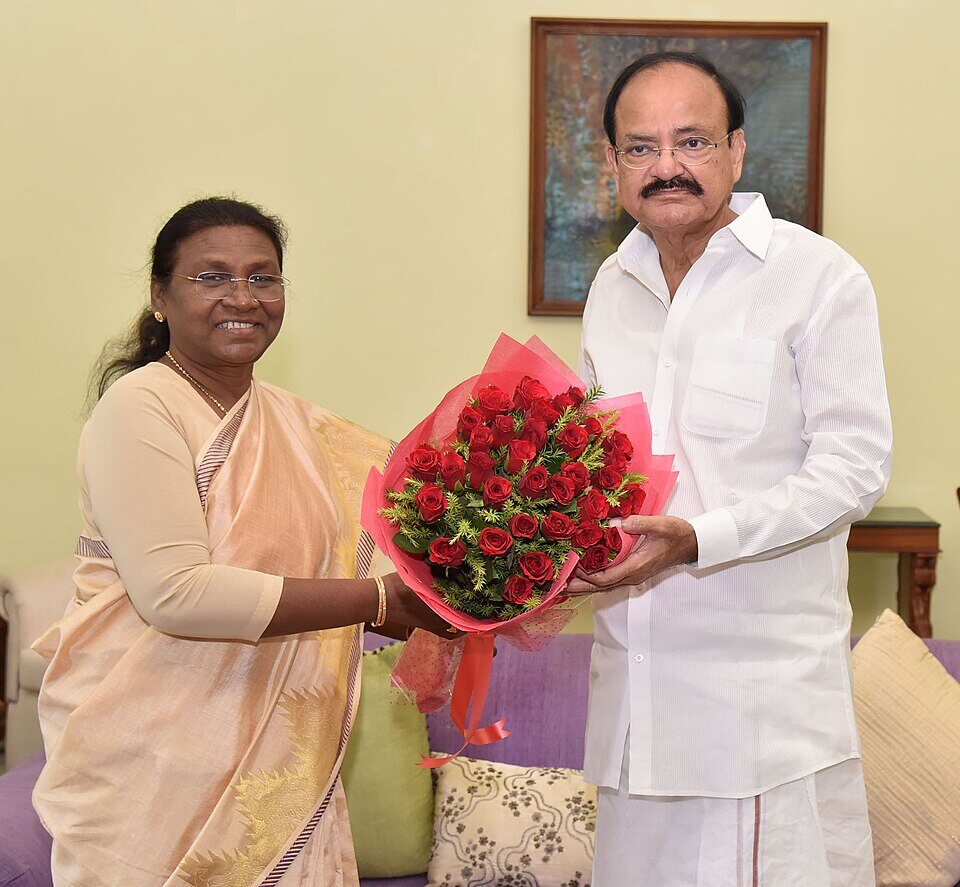
When she left Raj Bhavan in July 2021, Droupadi Murmu had done something that very few candidates for the presidency have done: she had already exercised, at state level, almost the entire range of powers she would later exercise at Union level.
Appointing a head of government. Administering constitutional oaths. Summoning and proroguing a legislature. Addressing it. Deciding what to do with a Bill. Presiding over universities. Representing the state on ceremonial occasions.
The presidency multiplies the scale of each of those functions and adds several — supreme command of the armed forces, the reception of foreign envoys, appointments to the higher judiciary. But it does not introduce an unfamiliar kind of work. She arrived at Rashtrapati Bhavan in 2022 having spent six years doing a smaller version of the same job.
Continue